Executive Summary
This consultancy report evaluated intense competition Tesla faced in global EV market, particularly from major competitors such as well-established automakers BYD, Ford, Volkswagen, GM, and new entrants like Li Auto, Rivian and Lucid Motors (Gratton, 2024). The purpose of the report was to assess how these competitors impacted Tesla’s market position and to develop strategic recommendations that would allow Tesla to sustain its leadership while addressing current and future competitive challenges.
Tesla’s primary challenge was identified as intense competition, especially from BYD, which made significant inroads into affordable EV market (deAcostaNoya, 2024). Ford and Rivian posed additional threats in electric pickup segment, while Volkswagen and Lucid Motors were making strides in premium EV spaces. The report also recognised that Tesla’s price premium and production delays, particularly with CyberTruck, further compounded its competitive challenges.
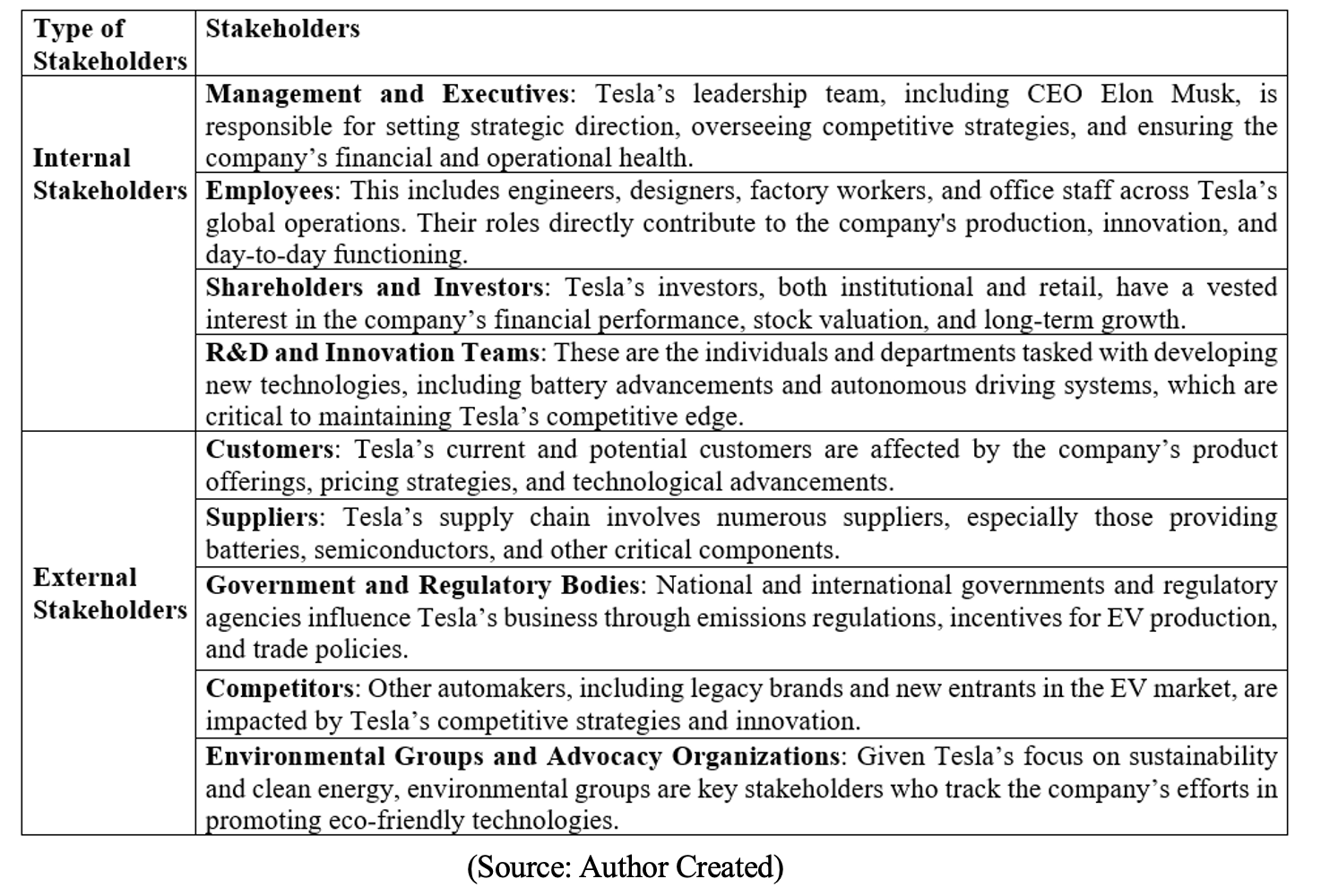
A stakeholder analysis revealed how these challenges impacted diverse groups. Internally, Tesla management, employees, investors, and shareholders were primarily concerned with company’s ability to retain its market dominance and continue delivering innovative products and externally, customers, suppliers, and government agencies were closely monitoring Tesla’s response to growing competition (Hopkins and Lazonick, 2024). Investors sought financial returns and long-term sustainability, while customers were increasingly drawn to more affordable EV options from Tesla’s competitors. Suppliers, particularly those providing raw materials and components, were focused on how Tesla’s production challenges could affect their business relationships. Finally, government agencies were invested in Tesla’s role in advancing clean energy and transportation innovation.
A critical evaluation of Tesla’s competitive position was conducted using secondary data and Porter's Five Forces analysis. BYD emerged as formidable competitor particularly in Chinese market, due to its ability to offer high-quality, affordable EVs (Sweney and Simpson, 2024). Ford’s dominance in electric pickup truck segment with F-150 Lightning, and Rivian’s niche appeal in the off-road EV market, also posed significant challenges for Tesla’s growth in this segment.
Based on this evaluation, the report made several key recommendations. Tesla has been advised to diversify its product range by introducing more affordable EV models to compete with BYD in price-sensitive markets like China and Southeast Asia, allowing Tesla to capture a larger share of the mass-market segment while maintaining its dominance in premium space with models like the Model S and Cybertruck (Levchenko and Yanchuk, 2024). Prioritizing the production and delivery of the delayed Cybertruck was also recommended, as competing products like the Rivian R1T and Ford F-series have already gained traction in electric pickup market (Crothers, 2024). Expanding Tesla’s Supercharger network, particularly in underserved regions, and offering “Charging as a Service” to non-Tesla vehicles would generate additional revenue and reinforce Tesla’s brand leadership in EV infrastructure, as seen with current network generating $1.74 billion in annual revenue (Fisher, 2024). Continued investment in Tesla’s FSD technology and making it more accessible across models would appeal to a broader audience of tech-savvy consumers (Liu, 2024). Finally, strengthening Tesla’s presence in emerging markets such as India and Southeast Asia, where BYD is rapidly expanding, would enable Tesla to capture significant market share through its strong brand recognition and reputation for innovation.
The report identified that Tesla’s future growth and market leadership depended on its ability to address these competitive threats through these recommendations, Tesla would be well-positioned to maintain its dominance in global EV industry while continuing to set the standard for innovation and sustainability.
Introduction
Tesla Motors, an American designer and producer of electric vehicles and energy storage systems is in vanguard of this transition (Darbari, 2024). However, after continuously developing new EVs, competition has started increasing and Original Equipment Manufacturers are now planning and launching new EVs to compete with Tesla and new players who invest a lot of money to establish themselves in market. The purpose of this consultancy report is thus to analyse this increased competition and map out measures that Tesla needs to undertake to remain relevant amidst these changes.
Tesla is facing increased competition in EV market. Traditional automakers like Ford, General Motors, and Volkswagen have accelerated their investment in electric vehicles, leveraging their extensive resources and expertise to launch competitive EV models. Additionally, new entrants such as Rivian and Lucid Motors, as well as international players from China like NIO and BYD, are rapidly gaining traction (Silva, 2024). In addition, Tesla has faced multiple product recalls caused by software glitches, battery malfunctions, and mechanical problems (Lerman et al., 2023). This report will examine challenges posed by this intensified competition and explore how Tesla can address these issues to secure its future growth.
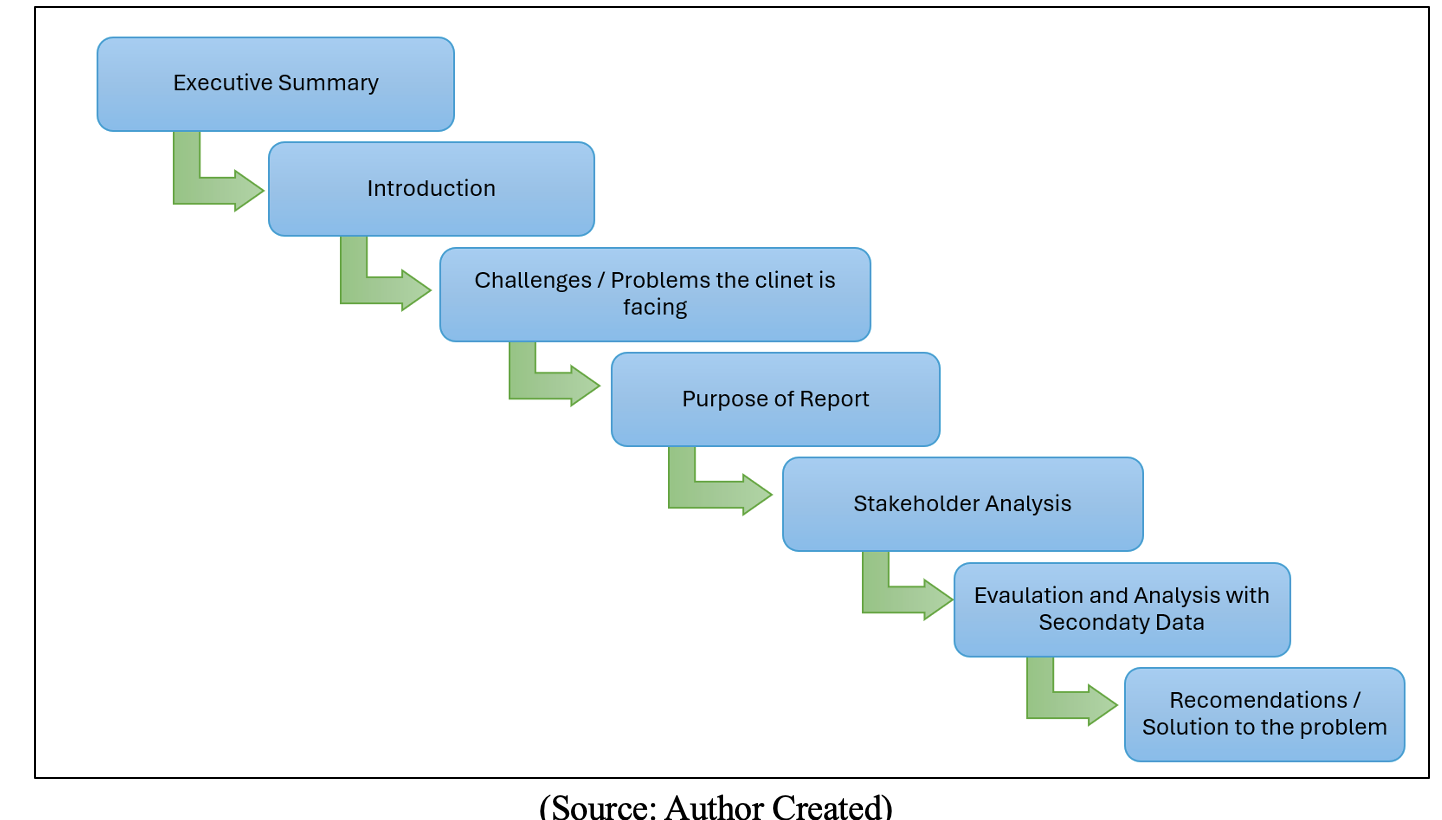
This report will begin by identifying core challenges Tesla is facing, particularly its competitors and evolving dynamics of global electric vehicle market. A stakeholder analysis will assess how competitive pressures impact key stakeholders, including customers, investors, and suppliers. Through a detailed evaluation of secondary data, the report will then provide a thorough analysis of competitive landscape, market trends, and Tesla's current position. Finally, the report will offer strategic recommendations aimed at strengthening Tesla’s competitive position, including innovations in product development, market diversification, and operational efficiency. By the end of this report, readers will gain a clear understanding of Tesla’s competitive challenges, potential impact on its stakeholders, and strategic steps required to ensure company's continued success in electric vehicle market.
Figure 1 - Structure of Report
Current Challenges/Problems Tesla is Facing
Tesla, the trailblazer in EV industry, is currently confronted with formidable challenges primarily due to escalating competition.
Intense Competition:
The challenge that Tesla faced comes from legacy automakers such as General Motors, Ford and Volkswagen who have quickly moved up EV manufacturing scale. These companies with manufacturing experience of over three decades, fully functional global supply chain networks, and almost unlimited financial resources, have recently started production of new EV models that are direct competitors of Tesla. Tesla reported a $1.4 billion decline in earnings and a 9% decline in revenue (Alten, 2024).
The competitive advantage of these traditional automakers lies in ability to scale production efficiently, leveraging economies of scale to reduce costs and increase profitability (Nazir et al., 2024). In Europe, Tesla is facing competition from high-end German automakers like BMW, Volvo, and Porsche and Chinese markets like BYD, Geeley, SAIC, NIO, and Xpeng. Ford, Koreans, and Rivian are making significant strides in US (Munoz, 2024). The latest vehicle from company, Cybertruck, has not been very successful in terms of sales, with only 11,688 units sold globally during first half of 2024.
Emergence of EV Startups: According to an article in the Economist (2024), Tesla is also facing competition from new EV-focused startups like Rivian, Lucid Motors, and Fisker. These startups are well-funded and offer innovative approaches to electric mobility, targeting niche segments and directly challenging Tesla in premium EV market. For example, Lucid Motors has launched Lucid Air, a luxury electric sedan lauded for its superior range and advanced technology, positioning it as a direct competitor to Tesla's Model S.
These startups are providing an option for consumers seeking an alternative to Tesla based on design, performance, and customer service where Tesla has occasionally been criticised.
Impact of Product Recalls on Brand Reputation: Over the past few years, Tesla has had to recall hundreds of thousands of vehicles due to various issues, including software glitches, battery safety concerns, and mechanical defects which have provided its competitors with a strategic advantage, allowing them to emphasize reliability and safety of their vehicles (Sharma, 2024). The negative media coverage surrounding recalls has also drawn increased scrutiny from regulatory bodies, adding to Tesla’s challenges in maintaining its reputation as a leader in the EV industry (Xu et al., 2024).
Further Challenges in a Saturated Market: Regarding the future, Tesla could face more challenges as electric vehicle market becomes even more popular. The competition is set to grow as more companies, including new automakers and startups, are planning to join market, posing a threat to potential high profits because of pressure to lower vehicle prices. Additionally, as the market evolves, Tesla could encounter challenges in differentiating its products through branding, especially because other companies are closing the technological gap. Nevertheless, ongoing supply chain challenges, particularly related to batteries and semiconductors, could hinder Tesla's ability to reach production targets and affect its leadership (Seo, 2024).
In conclusion, the intense competition Tesla faces from both established automakers and emerging startups is a critical challenge that is deeply intertwined with current market dynamics. The impact of product recalls on Tesla’s brand reputation, combined with the increasing saturation of the EV market, poses significant risks to company’s future growth. Addressing these challenges will require strategic responses to protect Tesla’s market share and ensure its continued success in evolving automotive landscape.
Purpose of the Report
- The objective of this consultancy report is to assess Tesla's worldwide exposure to the intense competition present in EV market. The study will examine how Tesla's position in market is affected by market saturation, declining sales, and technological improvements, in addition to growing rivalry from both established automakers and recent newcomers. To maintain its pioneering status, Tesla must address these challenges and regain consumer confidence (Suhail, Guangul and Nazeer, 2024). It will offer tactical suggestions on how Tesla may maintain its competitive advantage, increase its market share, and deal with demands on prices and obstacles to innovation put up by its rivals.
By identifying and analysing these issues, the report aims to provide Tesla with actionable recommendations on how to strengthen its competitive advantage. This will include strategies for differentiating its products, addressing pricing challenges, and continuing to innovate in face of increasing technological parity (Lukito and Wibowo, 2024). Ultimately, the goal is to help Tesla not only respond to these competitive pressures but also sustain its growth, improve market share, and ensure long-term profitability in an evolving and crowded market. - Impact of Research on Stakeholders:
By identifying all potential stakeholders and analysing their interests, a business report can provide a more comprehensive view of potential impacts (positive and negative) of a particular decision or project (Downar, 2018).
Table 1- Internal and External Stakeholders
Business Issue: Intense Competition in the EV Market
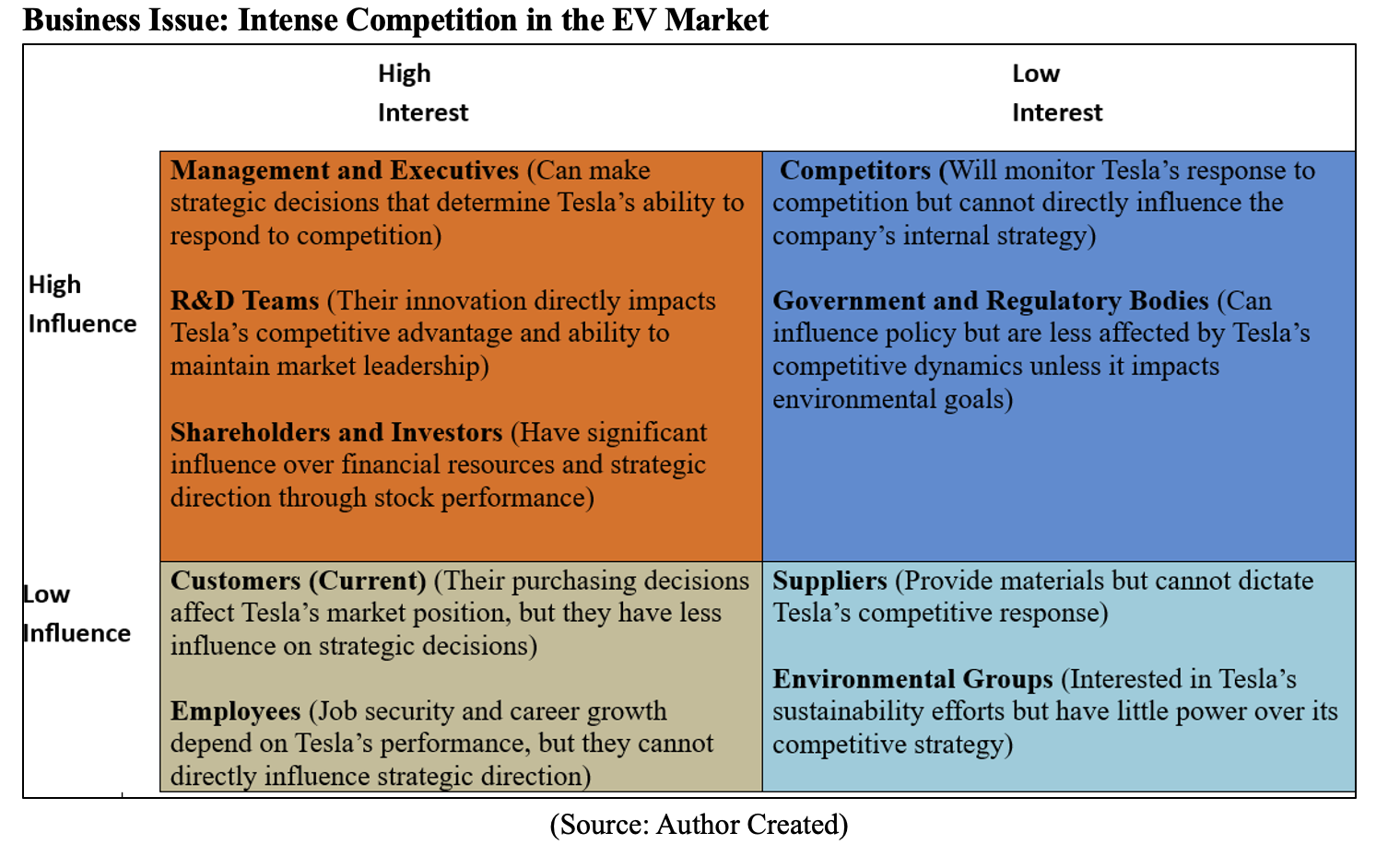
Figure 2- Stakeholder Analysis Matrix
Competitors:
Tesla will be up against fierce competition in EV market in 2024 from both well-established automakers and new entrants. VW and BYD (which dominate Chinese market with a vertically integrated supply chain) are two of company's main rivals (Liu, 2021). VW uses its global reach and ID series to compete, particularly in Europe. With vehicles like Mustang Mach-E and Chevrolet Bolt, respectively, Ford and GM are making big advances and concentrating on electric trucks and autonomous driving technology. With reasonably priced EVs like EV6, Kia is fast growing its electric vehicle lineup. Among the recent arrivals, Lucid Motors competes in luxury EV market with its Lucid Air, which offers better performance and range than Tesla's Model S, and Rivian targets adventure-focused clients with its electric trucks (John, 2024). Competitors will closely watch and analyse how Tesla responds to competition, but they are unable to directly affect the company’s internal strategy.
Therefore, Competitors are judged to be High influence/Low interest.
Impact of Report on Internal Stakeholders:
The report will significantly impact Tesla’s management team, employees, and shareholders by highlighting competitive threats and strategic opportunities. For management and executives, it provides critical insights into areas like pricing, product development, and market expansion, enabling them to refine Tesla’s long-term strategy to stay ahead of rivals. Employees will benefit from improved operational stability and job security as the company addresses competitive pressures, with opportunities to engage in innovative projects, especially in R&D and manufacturing (Ouanhlee, 2024). For shareholders and investors, the report outlines a clear roadmap for maintaining Tesla’s market leadership, reassuring them of company’s growth potential and financial performance. This strategic guidance will help Tesla protect its profit margins, sustain market share, and continue innovating in response to competitive threats.
Impact of Report on External Stakeholders:
Tesla’s response to the report’s findings will have a broad impact on customers, suppliers, government bodies, competitors, and environmental groups. Customers will benefit from improved product development and pricing strategies, enjoying more competitive pricing and cutting-edge technologies like enhanced battery range and autonomous driving (Neeraja et al., 2024). Suppliers, particularly those of key components like batteries and semiconductors, stand to gain from increased demand as Tesla strengthens its market position, although they could face challenges if Tesla struggles competitively. Government and regulatory bodies will see Tesla’s continued leadership as aligning with green initiatives, using the company as a model for promoting sustainable practices in the automotive industry. Competitors will be indirectly affected, as Tesla’s success will push them to innovate and improve their offerings, driving advancements across the EV sector. Environmental groups will view Tesla’s focus on sustainability and technological leadership as a reaffirmation of its commitment to reducing carbon emissions and promoting clean energy solutions.
Evaluation and Analysis with Secondary Data
The evaluation uses a combination of industry reports, market data, and financial analysis to compare Tesla’s position with its competitors, highlighting uncertainties and conflicts in the data and discussing their implications (Rabiee, 2024).
Analysis using Porter’s Five Forces:
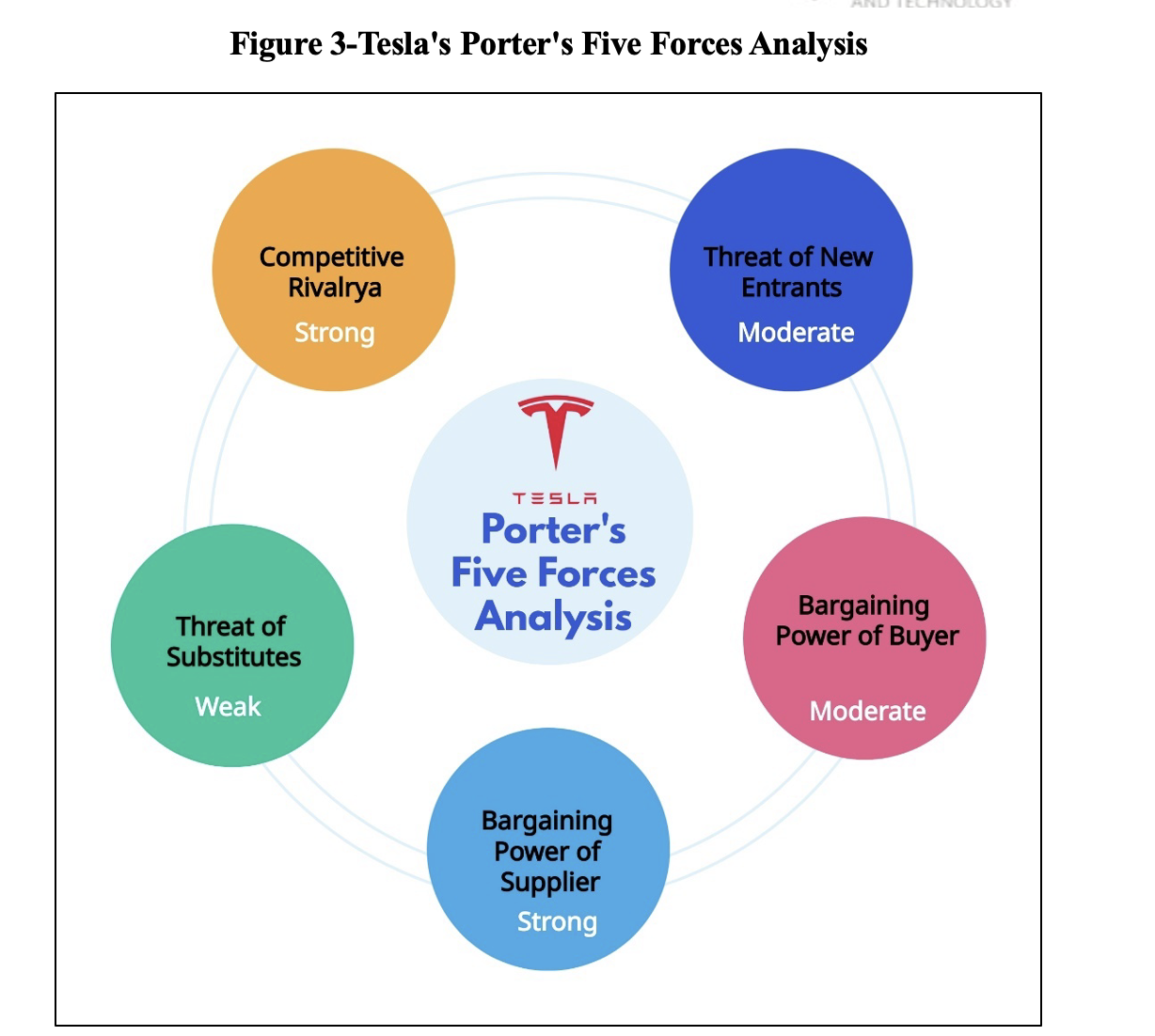
Porter’s Five Forces framework provides a structured approach to analysing the competitive dynamics within Tesla’s industry, focusing on intensity of rivalry, the threat of new entrants, the bargaining power of buyers and suppliers, and threat of substitute products (Pangarkar and Prabhudesai, 2024). This analysis will compare Tesla with its main competitors, evaluating products, services, and prices, and identifying strengths and weaknesses to determine potential threats and opportunities for Tesla.
Figure 3-Tesla's Porter's Five Forces Analysis
(Source: Author-Created)
Intensity of Rivalry Among Existing Competitors
The intensity of rivalry among existing competitors in the electric vehicle (EV) market is high, driven by increasing competition from established automakers and new entrants alike. Companies such as Tesla, BYD, Volkswagen, GM, and Ford are aggressively investing in innovative technologies, expanding their EV offerings, and competing on innovation, price, and performance. Tesla holds a dominant position due to its early market entry, technological leadership, and vertical integration, but competitors are closing the gap with their advancements in battery technology, production scalability, and brand recognition. As the global shift toward sustainable energy accelerates, market becomes more saturated, leading to price wars, technological races, and increased pressure on margins.
Market Analysis:
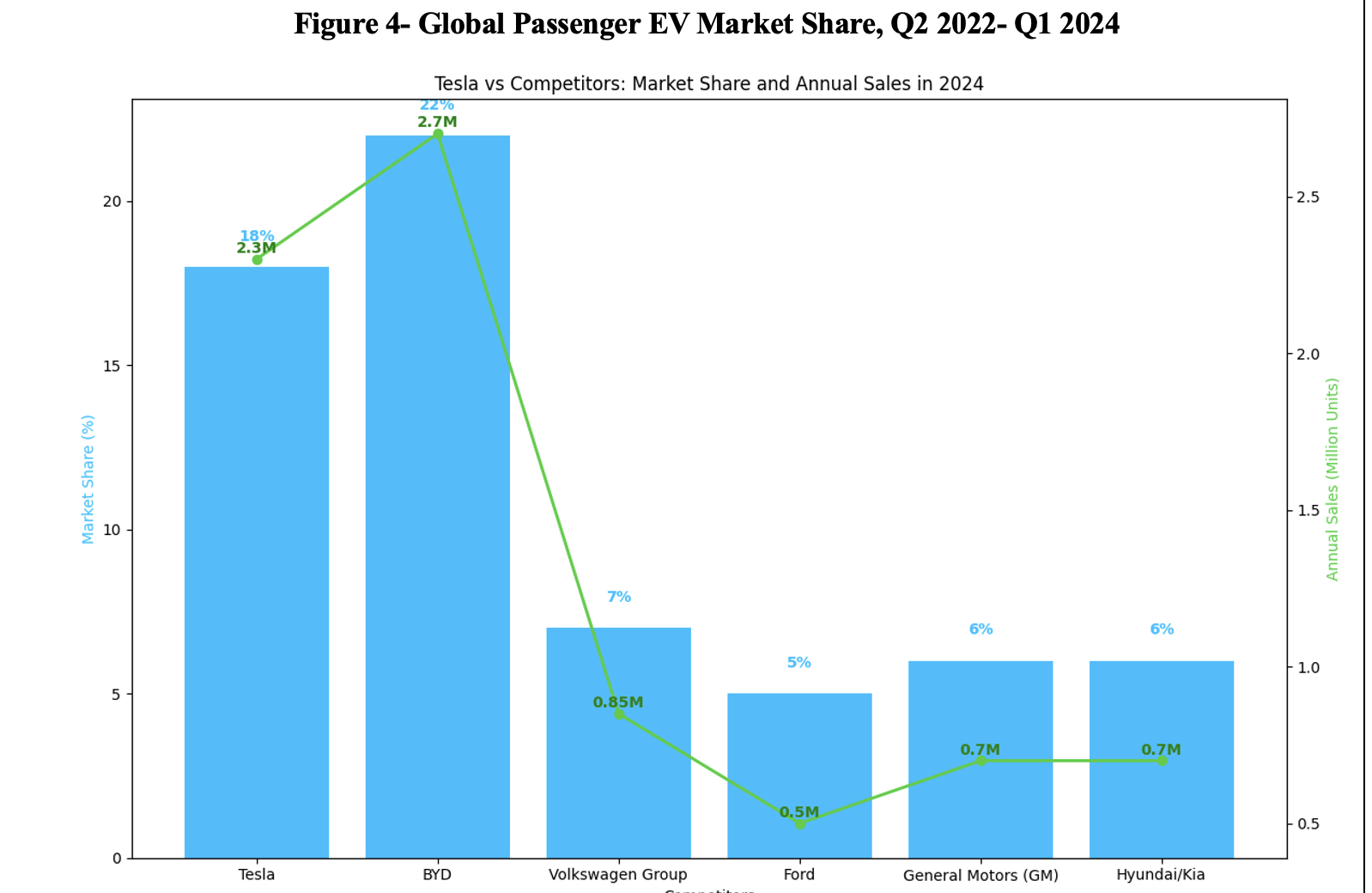
According to research firm Cox Automotive, Tesla's share of electric vehicle sales decreased to 49.7% in the second quarter, compared to 59.3% the previous year, General Motors, Ford Motor, Hyundai, and Kia gained ground against Elon Musk's company (Ewing, 2024). According to Cox, this was initial occasion that company's market share dropped under 50% in a quarter.
Figure 4- Global Passenger EV Market Share, Q2 2022- Q1 2024
(Source: chart-Author Created, Data: IEA)
In the 2024 global EV market, Tesla will be up against fierce competition from traditional automakers and recent arrivals. With a 22% market share and 2.7 million EV sales annually, BYD has overtaken Tesla and is now the industry leader in China recognised for its low production costs and vertical integration of battery technology. Volkswagen Group is a significant player in Europe, holding 7% of the market globally merit to its scalable EV platforms and legacy brands, despite difficulties in software integration and production ramp-up. With a 5% market share, Ford has become more popular in the United States because of its electric trucks, especially the F-150 Lightning. However, the company is rushing to switch from ICE to EVs. With 6% of the market, General Motors is concentrating on growing its Ultium battery line.
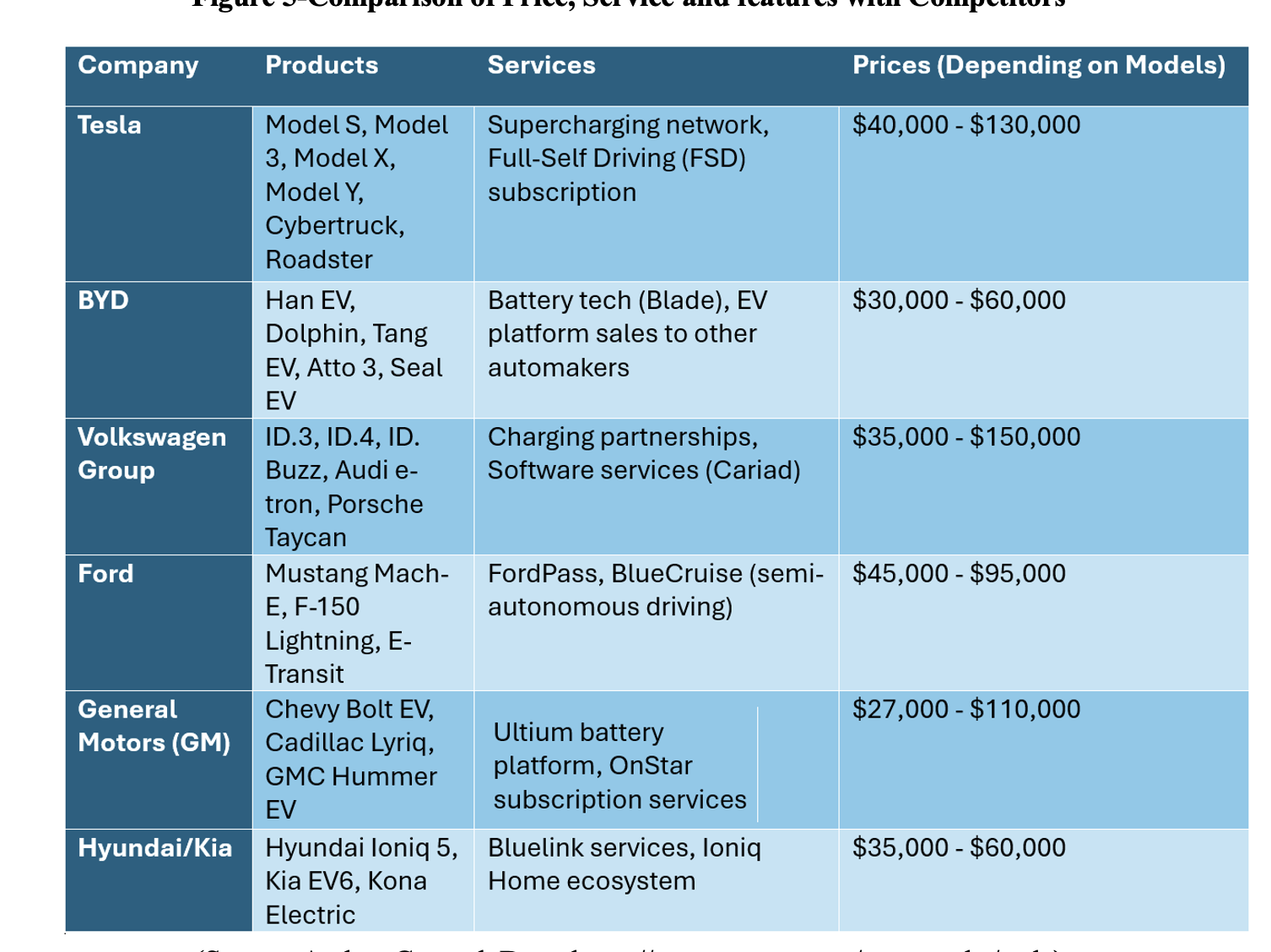
Comparison of Products, Services, and Prices:
Figure 5-Comparison of Price, Service and features with Competitors
(Source: Author-Created, Data: https://cars.usnews.com/cars-trucks/tesla)
Products: Tesla offers a range of high-performance EVs, including the Model S, Model 3, Model X, and Model Y, known for their long-range, cutting-edge technology, and autopilot features. In contrast, VW’s ID series focuses on mass-market appeal with more affordable pricing, while BYD’s offerings cater to budget-conscious consumer. GM and Kia target mass market and premium segment with their diverse EV portfolio.
Services: Tesla’s competitive edge lies in its integrated ecosystem, including Supercharger networks, over-the-air software updates, and a unique direct-to-consumer sales model. Competitors like VW and GM rely more on traditional dealer networks, which can be less flexible but offer widespread service coverage. BYD’s after-sales service is robust in China, benefiting from local market dominance.
Prices: Tesla’s pricing is generally higher than that of its competitors positioning it as a premium brand. However, BYD offers affordable EVs, and GM’s pricing strategy varies across models, with the Bolt being more affordable and the Hummer EV positioned as a luxury vehicle.
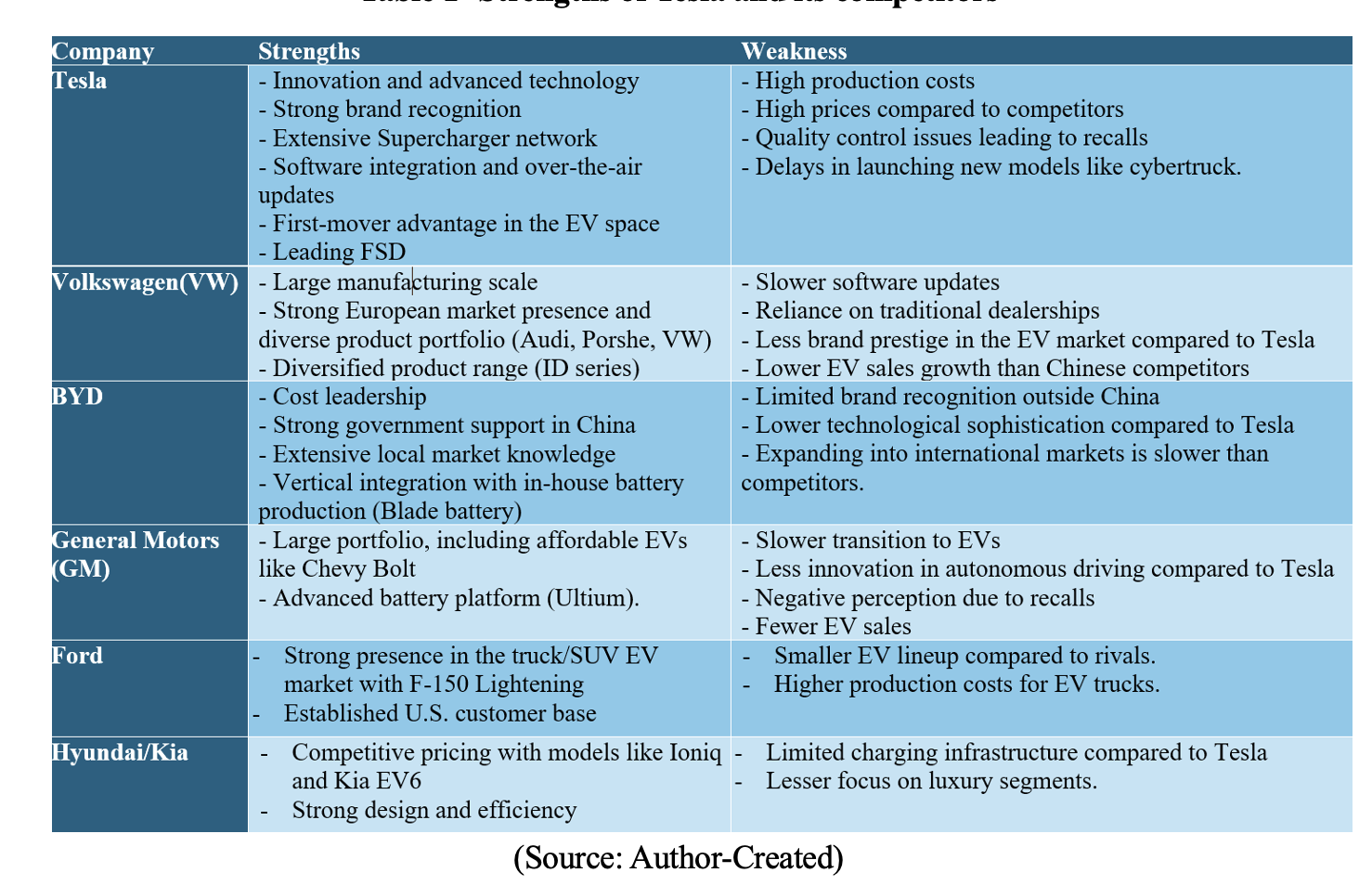
1. Strengths and Weaknesses:
Table 2- Strengths of Tesla and its competitors
2. Threat of New Entrants
The threat of new entrants in EV market is moderate, driven by the growing demand for sustainable transportation. However, the barriers to entry are substantial due to the high capital requirements, technological expertise, and the need for an extensive supply chain.
Tesla’s Position: Tesla benefits from significant economies of scale, brand loyalty, and a head start in EV technology. However, entry of new players, particularly technology companies and startups focusing on niche segments, could disrupt market. These new entrants may leverage innovative business models or cutting-edge technology to carve out a market share.
Threats: Companies like Rivian and Lucid Motors have successfully entered the market, offering niche or premium vehicles, while start-ups in China, such as NIO and Xpeng, have gained traction due to strong local backing and innovation in areas like battery swapping and autonomous driving (Cheng and Yoon, 2024). Moreover, partnerships with large companies like Amazon (in the case of Rivian) and backing from investment funds (such as the Saudi PIF for Lucid) have allowed these new entrants to scale quickly, challenging established automakers like Tesla. However, despite these successes, new entrants still face challenges, including the massive costs of scaling production and competing with Tesla’s established brand and infrastructure.
3. Bargaining Power of Buyers
The bargaining power of buyers in the EV market is increasing, driven by the growing number of available choices and the gradual reduction in EV prices as more manufacturers enter the market.
Tesla’s Position: Tesla's brand equity, innovative technology, and strong customer loyalty mitigate some of the bargaining power of buyers. However, as competitors like VW and BYD offer more affordable alternatives with similar features, buyers have more negotiating power, especially in markets like China and Europe. Ford, Rivian, Lucid and Kia are also providing affordable alternatives to EVs in the US.
Threats: Increased buyer expectations for quality, range, and price competitiveness mean that Tesla must continuously enhance its product offerings and customer service. Failure to do so could result in loss of market share to competitors who offer better value propositions.
Opportunities: Tesla can leverage its software capabilities, launching affordable EVs, and brand strength to introduce new features and services, enhancing customer loyalty and potentially reducing bargaining power of buyers.
4. Bargaining Power of Suppliers
The bargaining power of suppliers is relatively strong, particularly for critical components like batteries and semiconductors, where supply is constrained, and demand is rising.
Tesla’s Position: Tesla’s vertical integration strategy, including its partnerships with battery suppliers and the development of its battery technology (e.g., 4680 cells), reduces dependence on external suppliers (Ozsevim, 2024). However, global supply chain disruptions and competition for resources can increase supplier power.
Threats: Supply chain disruptions, such as shortages of semiconductors or raw materials for batteries, could significantly impact Tesla’s production capabilities, giving suppliers more leverage in negotiations.
Opportunities: By continuing to invest in vertical integration and securing long-term contracts with key suppliers, Tesla can mitigate some of these risks and ensure a steady supply of essential components.
5. Threat of Substitute Products
The threat of substitute products is moderate, with alternatives to EVs including internal combustion engine (ICE) vehicles, public transportation, and emerging technologies like hydrogen fuel cells.
Tesla’s Position: As the EV market grows, the threat from ICE vehicles is diminishing, especially as governments worldwide implement stricter emissions regulations (Qadir et al., 2024). However, the potential rise of hydrogen-powered vehicles or other alternative energy sources could pose a long-term threat.
Threats: If alternative technologies like hydrogen fuel cells become more viable, they could present a significant threat to Tesla’s market share, particularly in regions where these technologies are heavily subsidized or favoured by government policy.
Opportunities: Tesla can capitalize on its brand and innovation to explore and potentially lead in alternative energy technologies, such as energy storage and solar energy, further diversifying its product offerings and reducing threat of substitutes.
Threats Due to Competitors’ Strengths:
Price Pressure: Tesla faces increasing price competition as rivals like BYD offer electric vehicles at lower prices, ranging from $30,000 to $60,000, significantly undercutting Tesla’s lineup.
Automakers like Volkswagen and Hyundai/Kia have also introduced models priced at $35,000-$60,000, forcing Tesla to lower its prices several times to maintain market share.
This growing price pressure from global competitors has led to intensified pricing strategies, particularly as new, affordable EVs gain popularity.
Delay in Production and delivery of Cybertruck: Tesla Cybertruck registrations surged in May 2024, with 3,907 units, surpassing Ford's 2,353 F-150 Lightning and Rivian's 1,237 R1Ts. Despite being more expensive, the Cybertruck’s rapid production ramp-up at Tesla’s Austin plant is helping it temporarily led the electric pickup market. However, Ford still holds the top spot for the year, with 13,443 registrations versus Tesla's 7,879(White, 2024). The Cybertruck’s success reflects Tesla's production push, although questions remain about its long-term competitiveness given its high price and limited utility.
Brand Perception: Persistent quality issues and recalls have harmed Tesla’s brand image, allowing competitors to position themselves as more reliable options. According to GB News, Tesla issued a recall for 1.8 million vehicles, affecting all major models, including Model Y units produced between 2020-2024 (Reeves, 2024).
Innovation Competition: Tesla is dependent upon many suppliers for batteries including Panasonic as its long-time partner. Whereas BYD has focused on battery technology, developing its proprietary Blade Battery, which enhances safety and energy density. GM has introduced its Ultium battery system, which allows for flexible battery configurations and faster charging (Hummes et al., 2023), while Ford has been pushing innovation through development of its all-electric Mustang Mach-E and F-150 Lightning, aiming to blend performance with mass-market appeal.
Opportunities Due to Competitors’ Weaknesses:
Technological Leadership: Tesla's technological leadership, driven by innovations in battery efficiency, autonomous driving, and over-the-air software updates, gives it a significant competitive edge (Rajsingh, 2024). In contrast, competitors like BYD, VW, GM, and Ford are still catching up in areas such as software integration and autonomous driving capabilities. While these companies are making strides in EV production, they lack the same level of vertical integration and tech-driven agility, limiting their ability to match Tesla’s rapid pace of innovation.
Global Expansion: Tesla's aggressive global expansion, with Gigafactories in key regions like U.S., China, and Europe, strengthens its ability to meet global demand while reducing production costs and delivery times (Hopkins et al., 2024). Competitors like VW, GM, and Ford are still expanding their global EV manufacturing presence but often rely on third-party partnerships, which can slow their growth and limit control over production. Meanwhile, Tesla’s strong foothold in major markets allows it to scale more efficiently, giving it a strategic advantage over its rivals in international EV penetration
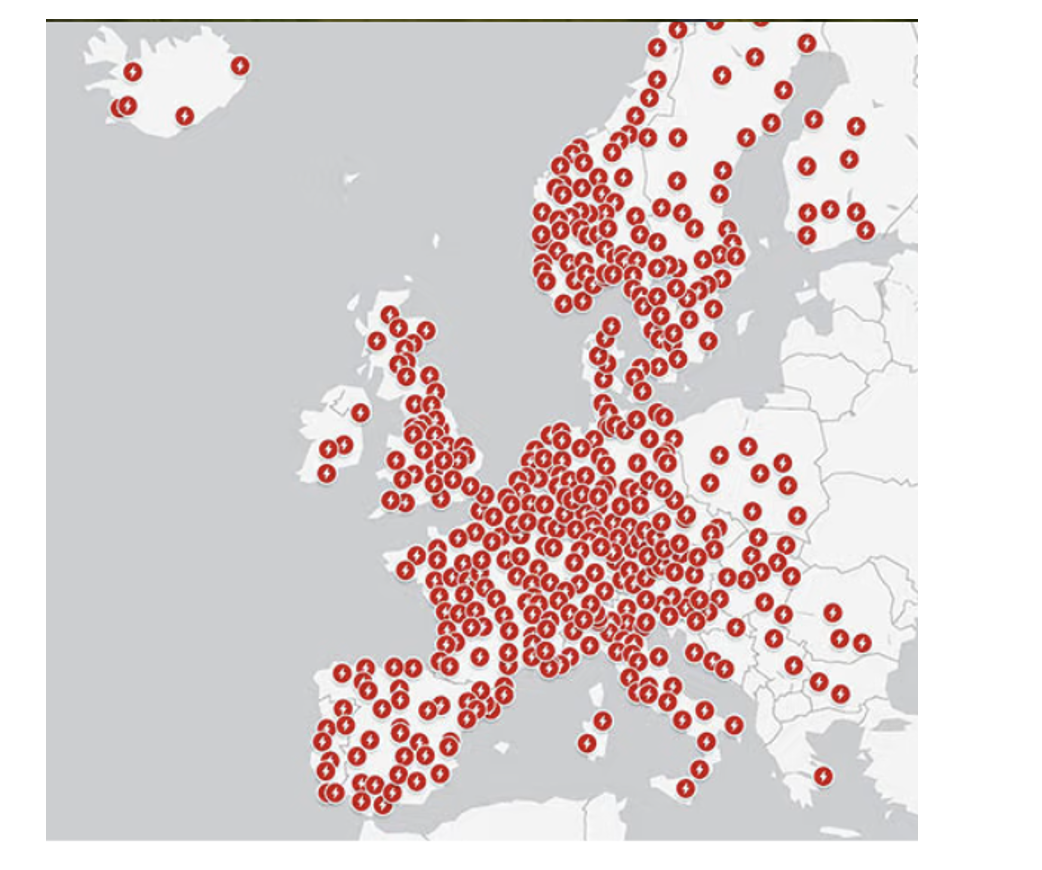
Supercharger network: The competitors of Tesla are dependent on other third-party supercharger service providers. The major competitive advantage of Tesla is its supercharger network. Tesla boasts a network of over 57,000 superchargers, making it largest and fastest charging network globally which is located on major routes near convenient amenities, which helps their customer to charge anywhere far from home (Armitage, 2024).
Figure 6- Tesla's Supercharger Network
(Source: Tesla, 2024)
Vertical Integration: Tesla’s vertical integration is a major strength, allowing it to control critical parts of its supply chain, such as producing batteries at its Gigafactories which reduces reliance on third-party suppliers, exemplified by Tesla making its battery cells, which ensures better quality control and cost efficiency (Levchenko and Yanchuk, 2024). This integration also shields Tesla from supply chain disruptions, such as during the global chip shortage, where it developed its software to work with alternative chips.
In 2024, Tesla faces significant competition from traditional automakers and emerging EV giants like BYD. The analysis reveals that while Tesla continues to lead in technology and brand power, it must navigate threats from more affordable, mass-market EVs, particularly from BYD, VW, GM, and luxury-focused competitors like Lucid, and Rivian. Tesla’s focus on improving production efficiency, expanding its Supercharger network, and maintaining its technological edge will be critical to sustaining its leadership in an increasingly crowded EV landscape.
Recommendations and Conclusion
Recommendations
This consulting research aimed to assess Tesla's competitive problems, especially considering fierce rivalry from major firms to provide recommendations on how Tesla may manage these risks while preserving its market leadership. The following suggestions are based on the results of competition analysis.
Diversification of Product Range and Market Segmentation: The comparison between BY’s low-cost, high-quality offerings and Telsa’s higher price points highlights the need for Tesla to compete in affordable EV space without compromising on quality or technology. Tesla should consider developing a more affordable EV to directly compete with BYD’s low-cost offerings like BYD Dolphin. This would allow Tesa to capture price-sensitive markets, particularly in Asia, Africa, and Latin America, where BYD is rapidly gaining market share (Lu, 2024). To mitigate this threat, Tesla should develop and release a model priced under $30,000 to target mass-market segment. This will allow Tesla to broaden its consumer base while maintaining leadership in premium segment with models like Model S, Model X, and Cyber Trucks.
Accelerate Production and Delivery of the Cybertruck: Tesla must prioritise resolving production delays for the Cybertruck to avoid losing ground to competitors like Ford and Rivian in electric pickup market (Hopkins et al., 2024). The Ford F-150 Lightning has captured significant market share, and Rivian’s niche off-road models have built a loyal customer base. Rapid production and efficient delivery of the Cybertruck would allow Tesla to enter and potentially dominate this critical market.
The evaluation revealed that Ford and Rivian have capitalised on their first-mover advantage in electric truck segment. Meeting delivery deadlines and scaling production will prevent competitors from monopolizing this market.
Expand Supercharger Network and Offer Charger as a Service: The evaluation demonstrated that Tesla’s competitors, particularly Volkswagen, BYD and GM, struggle with charging infrastructure. Expanding Tesla’s network and monetizing it for non-Tesla vehicles would increase its competitive advantage and revenue.
Leverage Autopilot and Full Self-Driving as a differentiator: The evaluation shows that competitors of Tesla lag in autonomous driving features. The evaluation also points out that Tesla’s FSD technology is a clear strength compared to its competitors. Tesla should continue to invest heavily in its FDS capabilities to maintain its technological lead. Tesla can emphasize this advantage by offering tiered packages of autonomous driving features for different models, making technology accessible at both premium and lower price points (Böhm, Watkowski and Buck, 2024).
Strengthen Brand Presence in Emerging Markets: The evaluation indicated that while BYD has established a strong presence in China and expanding into other regions, Tesla can leverage its brand strength to capture market share in emerging markets like India, Southeast Asia, and Latin America. Tesla should intensify its marketing and sales efforts in these emerging market areas where competitors like BYD are rapidly expanding. Tesla’s strong brand image and innovative features can appeal to consumers in these regions if Tesla builds awareness and adapts its product offerings to meet local needs.
This report has critically evaluated Tesla’s position in increasingly competitive EV market, particularly against rivals like BYD, Ford, Volkswagen, and Lucid. Using Porter’s Five Forces analysis and competitor comparison, the report has identified key challenges Tesla faces, such as BYD’s dominance in the affordable EV segment and Ford’s strength in electric pickup market.
Conclusion
The objective of this report was to analyse competition threat faced by Tesla and come up with strategic suggestions on ways of addressing the threat to retain its leadership in market. Nonetheless, Tesla remains market leader in many aspects, including technology and brand power, but increases in competitive pressure are emerging from both traditional automotive giants and other new EV-solely focused competitors.
Using Porter’s Five Forces analysis, highlighted intensity of the rivalry in the EV sector and how BYD, Volkswagen, GM, and Ford are slowly catching up with Tesla’s first-mover advantage. This intensification is well exemplified in Market share aspect whereby Tesla had its market share slip below the 50% mark for the first time in Q2 2024 (Hood, 2024). The threat of new entrants is high nevertheless significant capital intensity and technical obstacles; firms such as Rivian and Lucid Motors have emerged to occupy market niche of premium EVs.
The bargaining power of buyers is becoming challenge to Tesla due to greater availability of competitive EV devices as well as a general trend of coming down the prices of such cars across the globe. This trend is well illustrated by BYD company whose models are priced at $30,000 to $ 60,000 that is relatively cheaper in market than the Tesla models. The report also described the intensity of the bargaining power of suppliers and where Tesla was vulnerable, such as with the batteries and other electronics components necessary for its vehicles, a risk that can be considered in part managed with Tesla’s vertical integration approach.
The evaluation highlighted the following core competencies that include the company’s technological hold over some vital aspects such as battery power and autonomy from self-driving systems, Supercharger network which consists of more than 57000 charging stations all over the world, and brand image (Came, 2024). Still, it unveiled weaknesses, including the company’s pricing model and bringing new products to the market, like Cybertruck, an electric pickup vehicle, rather late.
To overcome these challenges and build on their strengths, the report has provided a four-pronged strategy. Firstly, product portfolio issue, Tesla should develop a standard range EV model that is lower than $30000 to compete directly with BYD to capture associated lowest-end market. Secondly, bringing forward the delivery and production of Cybertruck is essential to guard the firm’s market share in the electric pickup segment against Ford and Rivian.
In addition, increasing the Supercharger station and charging non-Tesla vehicles represents a plus in on-demand services that can further improve Tesla’s competitive edge and revenues. To continue to invest significantly in FSD is to sustain the technological advantage that is increasingly becoming the strategic edge amid increasing competition in new EV segment.
References
Alkan, N. and Koksal, C.D. (2024) ‘Identifying consumer preferences for new generation vehicles using multidimensional preference analysis’. Available at: https://essuir.sumdu.edu.ua/handle/123456789/95915.
Armitage, G. (2024) 'Tesla Supercharger network: complete guide to Tesla charging stations,' DrivingElectric, 22 April. Available at: https://www.drivingelectric.com/tesla/52/tesla-supercharger-network-complete-guide-to-tesla-charging-stations. [Accessed 19 September 2024]
Aten, J. (2024) 'Tesla’s earnings highlight the company’s biggest problem. It’s a cautionary tale for every leader,' Inc.com, 25 April. https://www.inc.com/jason-aten/teslas-earnings-highlight-companys-biggest-problem-its-a-cautionary-tale-for-every-leader.html. [Accessed 2 July 2024]
BBC News (2024) Tesla Autopilot recall to be probed by US regulator. Available at : https://www.bbc.co.uk/news/articles/c4n17zl39v8o. [Accessed 12 July 2024]
Bednarski, L. et al. (2023) 'Geopolitical disruptions in global supply chains: a state-of-the-art literature review,' Production Planning & Control, pp. 1–27. Available at https://doi.org/10.1080/09537287.2023.2286283.
Böhm, N., Watkowski, L.M.-L. and Buck, C. (2024) 'Establishing platform-based ecosystems: how automotive manufacturers adapt their value creation to a digital end,' in Edward Elgar Publishing eBooks, pp. 147–163. Available at: https://doi.org/10.4337/9781035301003.00016.
Bohnsack, R. (2024) Redefining strategic success : a comprehensive analysis of companies gaining competitive edge via disruptive technologies and control mechanisms. Available At: https://repositorio.ucp.pt/handle/10400.14/45267.
Came, F.T. (2024) The supercharger network is a game changer for EVs. Available at: https://globe-net.com/why-non-teslas-plugging-into-the-supercharger-network-is-a-game-changer-for-evs/. [Accessed: 28 September 2024]
Cheng, E. and Yoon, E. (2024) Chinese EV start-ups Nio and Xpeng turn to the mass market for growth. Available at: https://www.cnbc.com/2024/04/26/chinese-ev-start-ups-nio-and-xpeng-turn-to-the-mass-market-for-growth.html. [Accessed: 24 September 2024]
Chen, S.L., Li, W. and Liu, Y. (2024) 'Analysis on the development, sales and development of new energy vehicles by BYD Company,' Highlights in Business Economics and Management, 24, pp. 1660–1666.Available at: https://doi.org/10.54097/3q44mj12.
CICC Research, CICC Global Institute xinran. liu@ cicc. com. cn, 2024. China’s Auto Industry to Grow From Large to Strong. In The Reshaping of China’s Industry Chains (pp. 273-290). Singapore: Springer Nature Singapore.
Crothers, B. (2024) 'Cybertruck sales jump as Tesla races to catch Ford F-150 Lightning,' Forbes, 21 May. Available at: https://www.forbes.com/sites/brookecrothers/2024/05/19/cybertruck-sales-jump-as-tesla-boosts-production/.
Darbari, N.A. (2024) 'Innovation in electric vehicle charging: A case study of tesla’s supercharging network,' World Journal of Advanced Engineering Technology and Sciences, 12(2), pp. 270–278. Available at: https://doi.org/10.30574/wjaets.2024.12.2.0295.
deAcostaNoya, R. (2024) How Tesla and its Chinese competitor compare, in 4 charts. Available at: https://edition.cnn.com/2024/04/03/cars/china-tesla-byd-competition-hnk-intl-dg/index.html.[Accessed: [Accessed: 20 September 2024]
Dickson, D. (2024) 'Tesla’s biggest problem: cars,' Financial Times, 26 April. Available at: https://www.ft.com/content/485109f3-9118-4d75-a202-58bd2b89da45. [Accessed 13 July 2024]
Downar, W. (2018) 'Identification and mapping of project stakeholders: criteria and methods,' Scientific Journal of the Military University of Land Forces, 187(1), pp. 165–179. Available at: https://doi.org/10.5604/01.3001.0011.7370.
Duan, Y., Lin, Z. and Mo, K. (2023) 'Analysis of financial strategy and operation strategy of BYD, Changan Automobile, and Great Wall Motor,' BCP Business & Management, 46, pp. 33–41. Available at: https://doi.org/10.54691/bcpbm.v46i.5074.
Ewing, J. (2024) 'Tesla’s share of U.S. electric car market falls below 50%,' The New York Times, 9 July. https://www.nytimes.com/2024/07/09/business/tesla-electric-vehicles-market-share.html. [Accessed: 12 August 2024]
Fisher, R. (2024) 'Tesla (TSLA) charging network has become a serious business,' Bloomberg.com, 9 April. https://www.bloomberg.com/news/newsletters/2024-04-09/tesla-tsla-charging-network-has-become-a-serious-business. [Accessed: 20 September 2024]
Gratton, P. (2024) What Are Tesla's (TSLA) Main Competitors? Available at: https://www.investopedia.com/ask/answers/120314/who-are-teslas-tsla-main-competitors.asp.[Accessed: 20 September 2024]
Global EV Outlook 2023. (2023). In Global EV outlook. Available at: https://doi.org/10.1787/cbe724e8-en
Gumiel, J.Á. (2024) 'Improving the reliability of automotive systems,' in Springer eBooks, pp. 151–195.Available at: https://doi.org/10.1007/978-3-031-59361-1_7.
Hood, B. (2024) 'Tesla’s market share falls below 50 percent for the first time,' Yahoo Finance, 10 July. Available at: https://uk.finance.yahoo.com/news/tesla-market-share-falls-below-173000071.html. [Accessed: 28 September 2024]
Hopkins, M. et al. (2024) Tesla as a global competitor: Strategic control in the EV transition, Working Paper. No. 225. Available at: https://www.ineteconomics.org/uploads/papers/WP_225-Hopkins-and-Lazonick-Tesla-final-Sept-12.pdf.
Hopkins, M. and Lazonick, W. (2024) Tesla as a global competitor: Strategic control in the EV transition. Available at: https://doi.org/10.36687/inetwp225.
Huang, W. (2023) 'Understanding Tesla’s financial strength: Analysis of financial reports and DuPont analysis,' Highlights in Business Economics and Management, 6, pp. 250–261. Available at: https://doi.org/10.54097/hbem.v6i.6325.
Hummes, D.N. et al. (2023) 'A comparative study of different battery geometries used in electric vehicles,' Latin American Journal of Energy Research, 10(2), pp. 94–114. Available at: https://doi.org/10.21712/lajer.2023.v10.n2.p94-114.
John, T.L.S. (2024) Tesla vs. Lucid: What to know about each company’s electric vehicles before you buy. Available at: https://www.businessinsider.com/tesla-vs-lucid-which-is-better. [Accessed: 24 September 2024]
Jolly, J. (2024) 'BYD: China’s electric vehicle powerhouse charges into Europe,' The Guardian, 18 June. Available at: https://www.theguardian.com/business/article/2024/jun/18/byd-china-electric-vehicle-europe-eu-tariffs-tesla.[Accessed: 12 August 2024]
Khamisu, M.S., Paluri, R.A. and Sonwaney, V. (2024) 'Stakeholders’ perspectives on critical success factors for environmental social and governance (ESG) implementation,' Journal of Environmental Management, 365, p. 121583. Available at: https://doi.org/10.1016/j.jenvman.2024.121583.
Kolasani, S. (2024) Revitalizing Mobility: Understanding the Supply Chain Challenges, Opportunities, strategies, and Resilience in the EV and Automotive Revolution. Available at: https://jrctd.in/index.php/IJRCTD/article/view/46.
Krisher, T. (2024) Tesla profit falls 45% to $1.48 billion on weak EV sales in Q2 | AP News. Available at:https://apnews.com/article/tesla-earnings-second-quarter-sales-decline-8bdd0d655cddde90f534b41fd87edc4a. [Accessed 8 August 2024]
Levchenko, N. and Yanchuk, T. (2024) 'STRATEGY FOR INCREASING THE COMPETITIVENESS OF THE TESLA ELECTRIC VEHICLE,' Three Seas Economic Journal, 5(2), pp. 7–13. Available at: https://doi.org/10.30525/2661-5150/2024-2-2.
Lerman, R. et al. (2023) 'How Tesla Autopilot got grounded,' Washington Post, 16 December. Available at: https://www.washingtonpost.com/business/2023/12/16/tesla-autopilot-recall-timeline/. [Accessed: 9 August 2024]
Levchenko, N. and Yanchuk, T. (2024) 'STRATEGY FOR INCREASING THE COMPETITIVENESS OF THE TESLA ELECTRIC VEHICLE,' Three Seas Economic Journal, 5(2), pp. 7–13. Available at: https://doi.org/10.30525/2661-5150/2024-2-2.
Liu, Y. (2024) 'Tesla market Strategy analysis in the future,' Highlights in Business Economics and Management, 40, pp. 941–949. Available at: https://doi.org/10.54097/0qz1vs81.
Lukito, H.K. and Wibowo, S.A. (2024) 'Proposed marketing strategy to increase revenue through product differentiation (Case Studyat Cement Inc.),' International Journal of Current Science Research and Review, 07(07). Available at: https://doi.org/10.47191/ijcsrr/v7-i7-105.
Lu, S. (2024) 'Overcoming Obstacles of Tesla: Strategies for Problem-Solving,' Highlights in Business Economics and Management, 40, pp. 514–519. Available at: https://doi.org/10.54097/cw7ssm33.
Munoz, J.F. (2024) 'Tesla Is losing ground in the US and Europe: Here’s Why,' Motor1.com, 20 July. Available at: https://www.motor1.com/news/727166/tesla-losing-ground-in-us-europe/. [Accessed: 10 August 2024]
Neeraja, B. et al. (2024) 'Consumer perspectives and behaviours in the electric vehicle market,' in Advances in mechatronics and mechanical engineering (AMME) book series, pp. 58–83. Available at: https://doi.org/10.4018/979-8-3693-4314-2.ch003.
Nazir, Samera et al. (2024) 'Analyzing how COVID-19 moderates the relationship between organizational learning capabilities, technological innovation, supply chain management and enterprise performance in the automobile industry,' Business Process Management Journal [Preprint]. Available at: https://doi.org/10.1108/bpmj-02-2024-0116.
Ouanhlee, T. (2024) 'The influence of the manufacturing industry environment, organizational structures, and economic trends on employee responsibilities in the manufacturing industry,' Technology and Investment, 15(01), pp. 39–76. Available at: https://doi.org/10.4236/ti.2024.151004.
Ozsevim, I. (2024) Tesla’s EV battery production and global gigafactory network. Available at: https://www.automotivemanufacturingsolutions.com/ev-battery-production/teslas-ev-battery-production-and-global-gigafactory-network/45873.article. [Accessed on : 28 September 2024]
NHTSA recalls by manufacturer 2024 Available at: https://datahub.transportation.gov/stories/s/NHTSA-Recalls-by-Manufacturer/38mw-dp8u/. [Accessed 13 July 2024]
Palmié, M. et al. (2024) 'Valuation entrepreneurship through product‐design and blame‐avoidance strategies: How Tesla managed to change the public perception of sustainable innovations,' Journal of Product Innovation Management, 41(3), pp. 644–676. Available at: https://doi.org/10.1111/jpim.12732.
Pangarkar, N. and Prabhudesai, R. (2024) 'Using Porter’s Five Forces analysis to drive strategy,' Global Business and Organizational Excellence, 43(5), pp. 24–34. Available at: https://doi.org/10.1002/joe.22250.
Pereira, D. (2024) 'Tesla Marketing Strategy (2024),' Business Model Analyst, 11 July. Available at: https://businessmodelanalyst.com/tesla-marketing-strategy/. [Accessed 7 August 2024]
Qadir, S.A. et al. (2024) 'Navigating the complex realities of electric vehicle adoption: A comprehensive study of government strategies, policies, and incentives,' Energy Strategy Reviews, 53, p. 101379. Available at: https://doi.org/10.1016/j.esr.2024.101379.
Rabiee, S.S.P.B., Hamed GhorbanTanhaei, Mobina Pourmirza, Maryam (2024) 'Evaluation of sustainable marketing strategy based on product perceived value in attracting brand loyalty using FCM & rough BWM methods,' powertechjournal.com [Preprint].Available at: https://doi.org/10.52783/pst.344.
Rajsingh, P., V. (2024) Are Tesla’s Gigafactory and autonomous driving technology, automotive industry disruptors? Available at: https://repositorio.ucp.pt/handle/10400.14/45256.
Reeves, F. (2024) 'Tesla forced to recall 1.8 million electric cars over crash fears,' GB News, 1 August. Available at:https://www.gbnews.com/lifestyle/cars/tesla-recall-electric-vehicles-software-issues. [Accessed: 21 September 2024]
Rosário, A.T. and Raimundo, R. (2024) 'Importance of competitive dynamics of strategic Groups: opportunities and challenges,' Administrative Sciences, 14(7), p. 147. Available at: https://doi.org/10.3390/admsci14070147.
Roush, T. (2024) 'Tesla recalls over 125,000 cars for faulty seat belt warning,' Forbes, 4 June. Available at: https://www.forbes.com/sites/tylerroush/2024/05/31/tesla-recalls-over-125000-cars-for-faulty-seat-belt-warning/. [Accessed 25 June 2024]
Seo, D.-S. (2024) 'Self-Driving and Safety Security Response : Convergence strategies in the semiconductor and electronic vehicle industries,' koreascience.kr [Preprint]. Available at: https://doi.org/10.7236/IJASC.2024.13.2.25.
Sharma, A. (2024) 'Tesla recalls more than 1.8 million vehicles over bonnet defect,' The National, 31 July. https://www.thenationalnews.com/future/technology/2024/07/30/tesla-recall-bonnet-defect/. [Accessed 11 August 2024]
Silva, F. (2024) Equity research - Tesla Inc. Available at: https://repositorium.sdum.uminho.pt/handle/1822/88250. [Accessed: 9 August 2024]
Suhail, A.H., Guangul, F.M. and Nazeer, A. (2024) 'Pushing boundaries,' in Advances in mechatronics and mechanical engineering (AMME) book series, pp. 282–313. Available at: https://doi.org/10.4018/979-8-3693-4314-2.ch011.
Sweney, M. and Simpson, J. (2024) 'China’s BYD overtakes Tesla as top-selling electric car seller,' The Guardian, 2 January. Available at: https://www.theguardian.com/environment/2024/jan/02/chinas-byd-overtakes-tesla-as-top-selling-electric-car-seller. [Accessed: 20 September 2024]
Tesla Encounters Formidable Competition, 2024 Available at: https://www.spglobal.com/mobility/en/research-analysis/index.html [Accessed: 28 September 2024]
Tesla faces tough competition as the global EV market intensifies, 2024 Available at: https://electricdrives.tv/tesla-faces-tough-competition-as-the-global-ev-market-intensifies/ [Accessed on: 16.09.2024]
Tesla's revenue from FY 2008 to FY 2023, 2024 Available at: https://www.statista.com/statistics/272120/revenue-of-tesla/ [Accessed: 28 September 2024]
The Economist (2024) 'Think Tesla is in trouble? Pity even more its wannabe EV rivals,' The Economist, 7 April. https://www.economist.com/business/2024/04/07/think-tesla-is-in-trouble-pity-even-more-its-wannabe-ev-rivals. [Accessed: 23 September 2024]
White, E. (2024) 'Tesla Cybertruck outselling F-150 Lightning and Rivian R1T, based on registration data,' Road & Track, 17 July. https://www.roadandtrack.com/news/a61623925/tesla-cybertruck-outselling-ford-f-150-lightning-rivian-r1t-registration-data/. [Accessed: 20 September 2024]
Xu, J. et al. (2024) 'How social media expedites the crisis spillover effect: A case study of Tesla’s recall event,' Public Relations Review, 50(1), p. 102432. Available at: https://doi.org/10.1016/j.pubrev.2024.102432.